

Julie
Cet assistant IA est fourni à titre informatif.
N’hésitez pas à valider avec un conseiller.
N’hésitez pas à valider avec un conseiller.
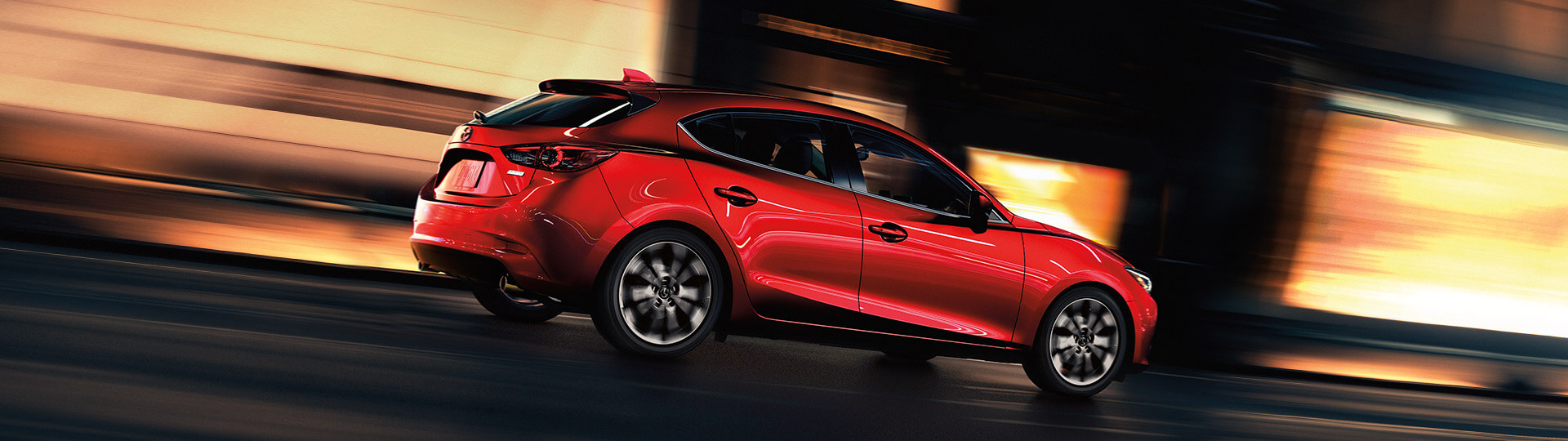
Mazda’s Skyactiv Technology is an innovative automotive engineering strategy designed to create a unique sense of symbiosis with the road. Based on the ancient Japanese principle of Jinba Ittai—where horse and rider are as one—Skyactiv Technology creates a natural and intuitive bond between vehicle and driver. With all Skyactiv components working seamlessly together, you also benefit from substantial fuel economy, enhanced safety, and low emissions. To create the drive you desire, day after day.
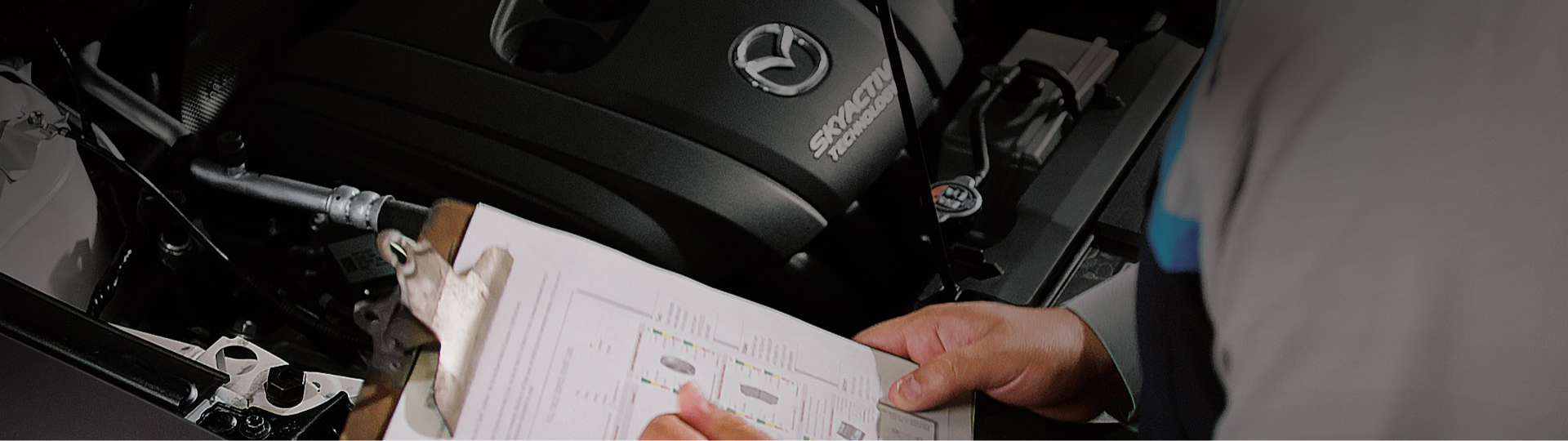
Skyactiv engines offer greater fuel economy and low emissions while benefiting from a lightweight and responsive design. Every time a Skyactiv engine starts, an immediate connection between vehicle and driver is formed. With several engines to choose from, the Skyactiv lineup is engineered for performance.
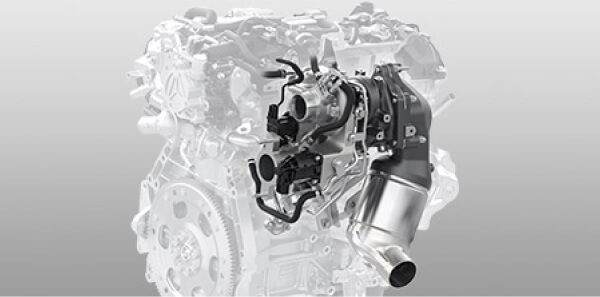
Exceptional power and torque are harnessed to achieve incredible fuel economy, offering extraordinary handling and noteworthy performance.
Features:
Available on:
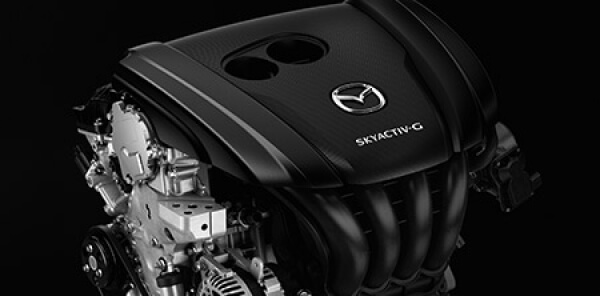
The 2.0 L and 2.5 L Skyactiv-G engines enhance everyday driving by offering more low-to-mid-range torque, consuming less fuel, and producing fewer emissions than our previous gasoline engines; fuel efficiency and torque are increased by 15%. Cylinder Deactivation is available for 2.5 L engines on select models.
Features :
Available on: Most Mazda models.
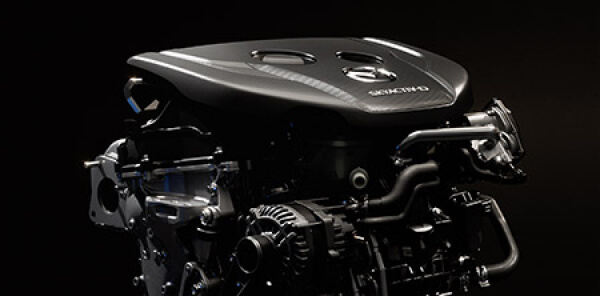
Featuring the world’s lowest compression ratio for a diesel engine, the 2.2 L Skyactiv-D twin-turbo was developed to meet emission regulations. To lower emissions, the engine uses a Selective Catalytic Reduction (SCR) system with urea injection combined with a NOx storage catalyst that converts nitrogen oxides (NOx) into harmless nitrogen. Equipped with two high-efficiency sequential turbochargers, the Skyactiv-D ensures smooth, direct response and superb acceleration.
Features :

The transmission is the cornerstone for a driver, providing immediate control over the vehicle. Skyactiv transmissions are custom-made to work in harmony with Skyactiv engines and are specifically designed to offer the extraordinary responsiveness characteristic of Jinba Ittai.
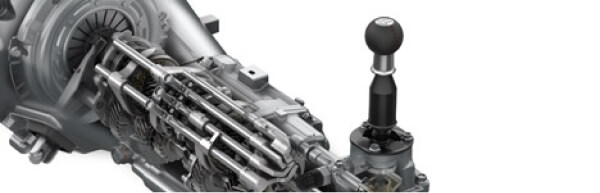
Inspired by the legendary MX-5, the 6-speed Skyactiv-MT manual transmission is smaller, lighter, and stronger than anything we have built before—allowing for greater fuel economy.
Features :
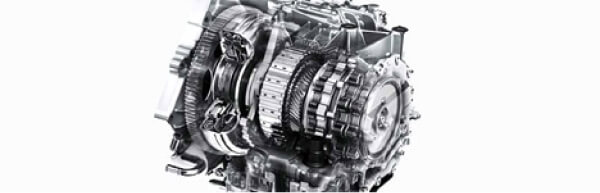
Our high-performance automatic transmission combines the direct feel of a manual with the smoothness of an automatic. You get cleaner, more responsive acceleration and sports-car-like performance.
Features :
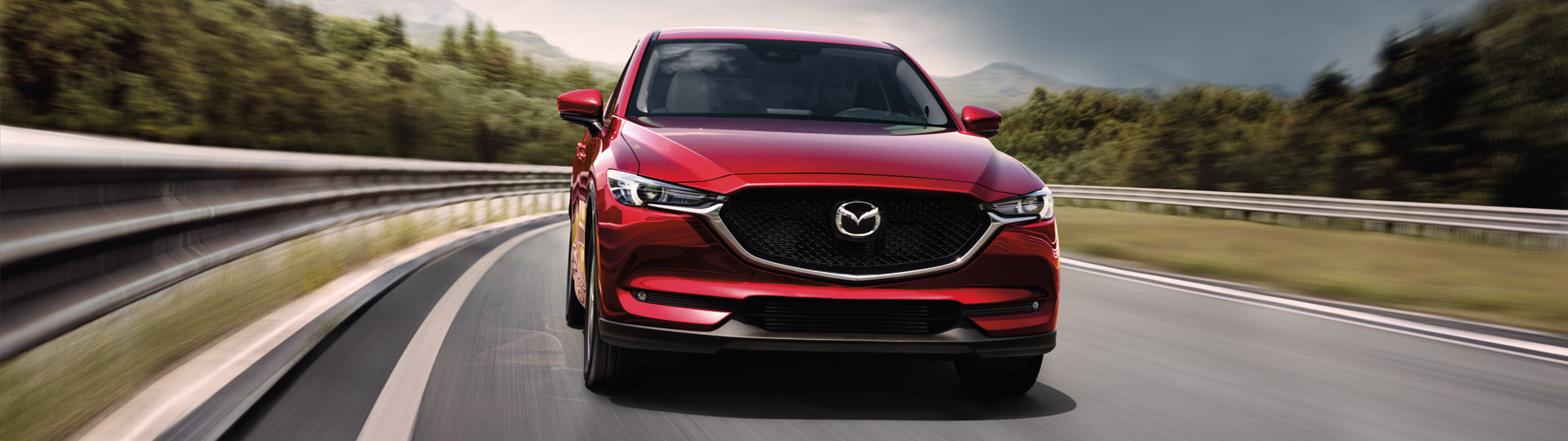
As part of Skyactiv Vehicle Dynamics, G-Vectoring Control (GVC) compensates for the effect of g-force on the driver and passengers to enhance the Jinba Ittai feeling. Mazda studies the biomechanical relationships between the human body and the vehicle to refine engineering systems and optimize smooth interaction. Whether cornering or driving in a straight line, fewer steering adjustments are needed, and acceleration affects the driver and passengers less. The vehicle behaves exactly as the driver expects, increasing confidence and reducing fatigue caused by g-forces.
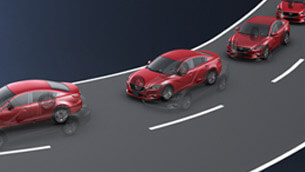
GVC affects how the vehicle and passengers are impacted in corners. As soon as the steering wheel is turned, GVC controls engine torque to decelerate, shifting the load to the front wheels.

Keeping the Jinba Ittai philosophy in mind, we designed the body and chassis to harmonize optimally. We drastically reduced weight compared to previous models and used ultra-high-tensile steel so our vehicle platform improves the responsiveness of Skyactiv engines and transmissions, while contributing to a safe and enjoyable drive.
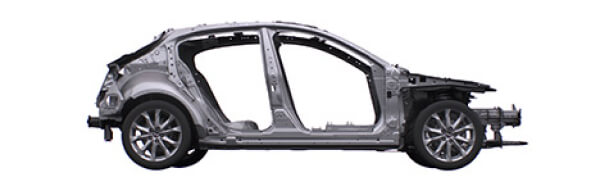
By opting for smarter design and materials, we prioritized a rigid shell (for better handling), excellent collision protection, and fuel economy. For the structure, we adopted straight-line and continuous frame concepts, where each section reacts in coordination with the others.
Features :
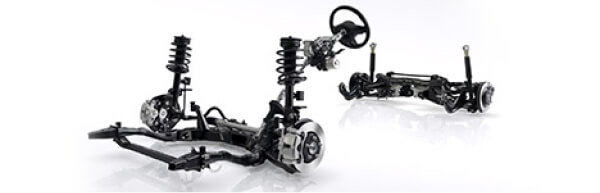
Designed to offer typical Mazda responsiveness, the Skyactiv-Chassis steering and suspension systems achieve two seemingly contradictory goals: making the vehicle agile at low speeds while remaining stable at high speeds. Stability and responsiveness are key safety features.
Features :